


Séminaire du Professeur Stephan Andreas Schunk le jeudi 8 janvier à 11h00 en salle UMR (Bâtiment B27) :
« New Developments in the Field of High Temperature Membrane Reactors designed for the Production of Bulk Chemicals »
Direct catalytic dehydrogenation of alkanes retrieves increasing attention for on-demand production of light olefines. Those reactions are endothermic and typically subjected to thermodynamic limitations at lower reaction temperatures. A promising approach to positively
influence the thermodynamic equilibrium is the application of integrated catalytic membrane reactors. By selective removal of hydrogen as a product the equilibrium can be shifted in respect to the alkane conversion according to the principle of Le Chatelier. For a later feasible process design information about catalyst and membrane kinetics as well as a combination thereof are required to match the space time yield of the catalytic reaction and the area time yield of the membrane permeation. In this seminar an experimental approach and the resulting potential of combination of catalysis and separation will be discussed.
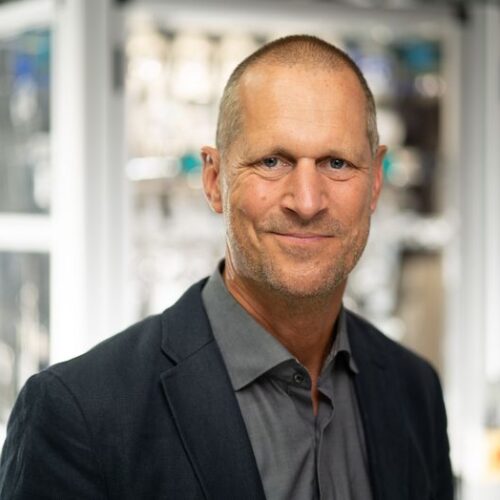
Le professeur Stephan Andreas Schunk occupe le poste de vice-président / expert exécutif et est l’un des membres fondateurs de hte GmbH. Il a étudié la chimie à l’université de Mayence et de Francfort et est titulaire d’un doctorat en chimie de l’université de Francfort. Il est professeur au Department of Chemical Technology de l’université de Leipzig, où il enseigne la numérisation des sciences des matériaux et la catalyse. Parmi ses autres fonctions au sein d’organisations, Stephan est porte-parole de la Commission de la Société allemande de catalyse GeCatS et du Conseil industriel de NFDI4Cat, l’initiative GeCatS pour la numérisation des sciences liées à la catalyse.
Il a plus de 25 ans d’expérience dans la R&D sur les catalyseurs hétérogènes et homogènes, en particulier dans le contexte de l’expérimentation à haut débit.
Pour ses contributions exceptionnelles dans le domaine de la catalyse, il a reçu le prix Jochen Block en 2000, le prix scientifique de la société Max-Planck en 2001 et a été récompensé par le WCOC à Sapporo en 2005 pour ses travaux sur la catalyse d’oxydation partielle en phase gazeuse. Il a également reçu le prix EFCATS Applied Catalysis Award en 2023. Depuis 2024, Stephan est membre du Conseil technologique de l’UE pour les matériaux avancés au service de la Commission européenne.
Ses domaines de recherche en catalyse sont l’oxydation partielle en phase gazeuse et liquide, la production et la conversion de gaz de synthèse, l’utilisation des énergies renouvelables et du dioxyde de carbone dans les conversions chimiques et le développement de nouveaux concepts pour la synthèse de matériaux en catalyse hétérogène. Dans son travail quotidien, l’expérimentation à haut débit, la numérisation de la R&D et l’utilisation de l’IA en chimie et en science des matériaux jouent un rôle important.
Prof. Dr. Stephan Andreas Schunk holds the position of a Vice President / Executive Expert and is one of the founding members of hte GmbH. He studied chemistry at Mainz and Frankfurt University and holds a PhD in chemistry from the University of Frankfurt; he holds a Professorship at the Department of Chemical Technology at University Leipzig for Digitalization of Materials Science and Catalysis. Amongst other roles in organizations Stephan is speaker of the Commission of the German Catalysis Society GeCatS and of the Industrial Board of NFDI4Cat, the GeCatS initiative for the digitalization of catalysis related sciences.
He has over 25 years of experience in heterogeneous and homogeneous catalyst R&D, especially in the context of high throughput experimentation.
For outstanding contributions to the field of catalysis he received the Jochen Block award in 2000, the Science Prize of the Max-Planck Society in 2001 and was awarded by the WCOC in Sapporo 2005 for his work in gas phase partial oxidation catalysis and has received the EFCATS Applied Catalysis Award in 2023. Since 2024 Stephan is a member of the EU Technology Council for Advanced Materials serving the EU Commission.
His fields of research in catalysis are partial oxidation in gas and liquid phase, syngas production and conversion, use of renewables and carbon dioxide in chemical conversions and the development of new concepts for materials synthesis in heterogeneous catalysis. In his daily work high throughput experimentation, digitalization of R&D and the use of AI in chemistry and materials science play a large role.